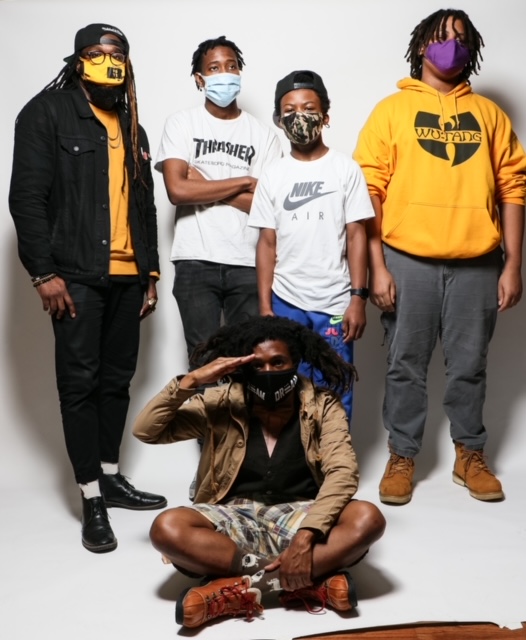
“Content is everything! Get as much content going as you can,” advises Mr. Turner.
Dennis Turner, otherwise known as Mr. Turner, is a producer, performer, and musical director. He is also a professional bass player. In total, he has 20 years of music industry experience. He has worked with artists such as Stevie Wonder, Chaka Khan, Dave Chappelle, Lionel Richie, David Foster and Kenny G., just to name a few. More than just a name, Mr. Turner is a well-respected figure in the music industry and his hometown of Washington D.C. When asked about his pre-COVID life versus life in isolation, this is what he had to say:
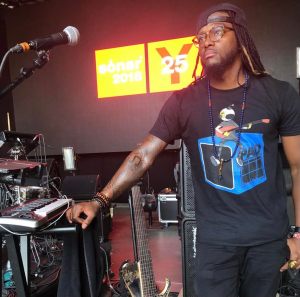
“I was doing about 160 shows per year nationally and internationally. We had to stop touring. Everything has gone either virtual or recorded.” Mr. Turner has been on three record releases that have come out since Covid. One was called the Odd Cure by a rapper named Oddisee. He made another record with the guitar player, St Ezekiel, and another with the guitar player, Oliver Saint Louis. Additionally, he’s been doing a weekly live streaming event called Eavesdrop with the artist named Frédéric Yonnet. He went to Yellow Springs Ohio to do Dave Chappelle’s encampment production as well.
For Mr. Turner, like many artists, Covid has created a negative financial impact. Most of his income is earned from live events. He said, “most of my income comes from touring or being on the road. We haven’t been able to make that kind of income; you have to supplement it.” He says that artists have to figure out ways to be more innovative. “We’re doing something every week. We have to figure out new ways to be inventive or more creative. It’s been a challenge, but it’s been a welcome challenge. It kind of feels like going back to being a teenager, in the sense of always playing and not really playing for the money. But you are playing for the love of it.”
For many young people in the District, the Covid-19 pandemic has brought most of their extracurricular activities to a halt. This is especially true for visual and performing artists. Places where people gather in groups to make art have been shuttered, making it challenging to continue creating said art.
Despite these difficulties, young artists like Chaeli Burns have been able to continue to express their creativity because of technology and personal adaptability. Since March, she has studied West African dance with Farafina Kan and studied art with ArtReach and Project Create through virtual platforms.
“The Coronavirus is dangerous, and we should be safe, but we can’t stop making art,” said Chaeli. “If we stopped making art, we would lose our artistic spirit. And maybe even not be artists. It’s like if I stopped walking. I would lose the ability to walk altogether.”
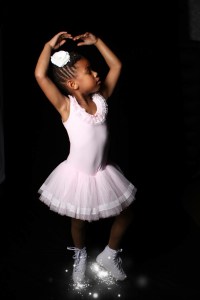
Covid restrictions have created even more barriers for local artists of color. Chaeli is an artist/ballerina who danced with Adagio Ballet, Kirov Academy, and Dance Institute of Washington (DIW). Due to covid-related closures, she is unable to participate in live class instruction. She has adapted and turned her passion for dance towards her love of fine art. She started her fine art career at Fillmore, followed by Treehouse Atelier, and Montpelier Cultural Arts Center. She is currently studying with ArtReach and Project Create.
“I have one thing to say to all the aspiring artists: ‘Always follow your dreams. Even if someone tries to stop you.”
Chaeli is one of many young people in the District that has had to adapt to the changing circumstances of Covid. The community of young black artists in the District has found inventive ways to continue to make art.
In the same vein, a group of young people studying music production at Project Create in Southeast, Washington, DC are working through the District’s social distancing guidelines to continue to make art. At the direction of Mr. Turner, who gives back to the community as a Teaching Artist of Project Create, students of the Music, Lyrics and Melodies course are meeting virtually to collaborate on a semester-long recording project. The author of the current piece produces beats with Project Create under the pseudonym Sirius Burns.
This week, the group met in person, masked up and socially distanced, to lay down lyrics over tracks and recorded a music video. A photoshoot took place as well. Students from other classes will join this project by creating album cover art. The joint project will culminate in a virtual student showcase next month.
Mr. Turner shared his observations of his students’ responses to Covid. “Project Create had to adapt to the pandemic like the rest of the world… the great thing about the program and the students was that in having to go to virtual learning, both the program staff and students are both more engaged! Students come in (virtually) and are really motivated to show their work and help each other and the staff is most encouraging with assistance and checking in its teachers and students!”
DC youth are creating art despite Covid lockdown. Virtual meeting platforms allow them to work together and remain connected in this period of isolation. The possibilities of artists learning and creating over virtual platforms is limitless. One could wonder what a national art program would be like during the Covid- 19 pandemic. If the President were to create a federal program similar to the Federal Art Project like the one that came out of the New Deal during The Great Depression, we could have a movement similar to the Harlem Renaissance. Mr. Turner, Chaeli Burns, and the students of Project Create could be its leaders.
Mr. Turner had some final advice for artists during Covid: “Just keep working on your craft because there’s always a light at the end of the tunnel, so just keep working.”
 The Watoto Speak!
Great job!
LikeLike
Nice Job Quinton!
LikeLike