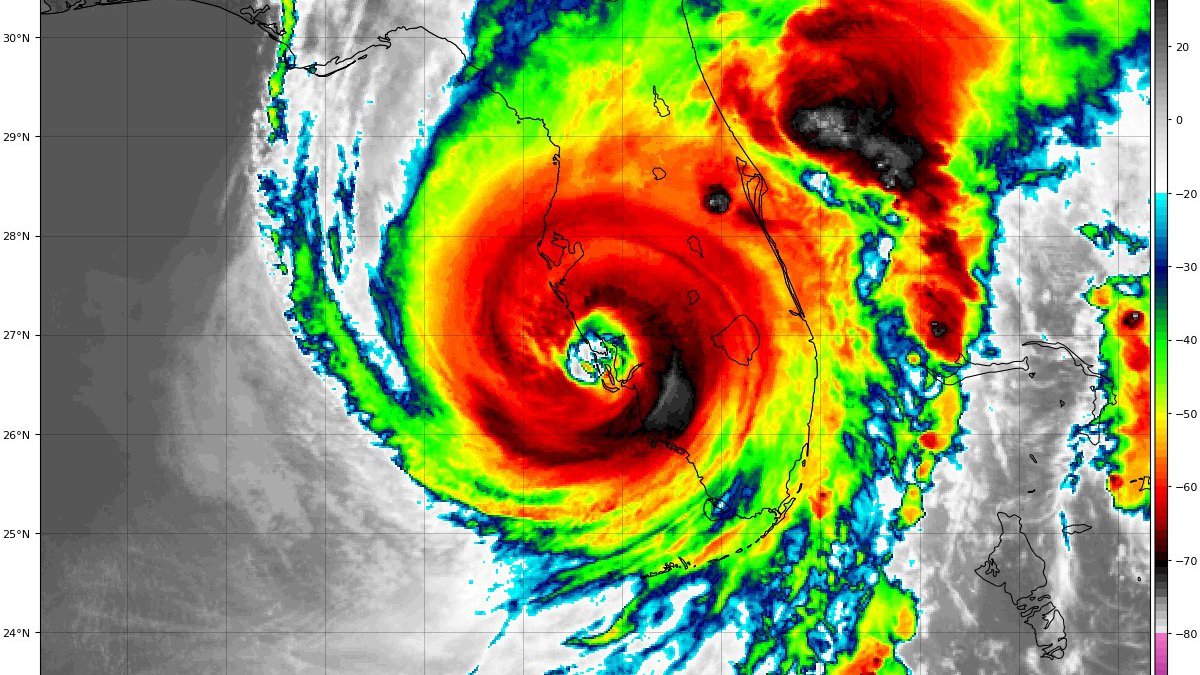
Hurricane Ian (Courtesy of WAFB)
Category four Hurricane Ian ripped through the state of Florida in September causing great damage to Sanibel Island and Fort Myers. It left a death toll of more than 100.
Many Black and Hispanic communities are still suffering because this storm left 2.5 million residents without power. A Black woman who dealt with Hurricane Ian complains that African Americans are always the last ones to receive power from the electrical companies after a storm. She has also claimed that FEMA has not yet rebuilt homes or repaired damages to communities of color.
Flooding causes major damage to homes. It can weaken the foundation and plumbing, and break down electrical systems. Without repairs, homes are at risk of collapsing. Many families in poverty who suffer from hurricanes have nowhere else to go and sometimes end up homeless.
FEMA provides funding and resources to help people recover from natural disasters. However, people in communities of color are saying they are frustrated because they are not receiving FEMA’s help to repair their homes.
In recent studies, FEMA funds the repairs for houses with the highest property value first, which in many cases belong to caucasian residents. In the housing market, homes that are in Hispanic or Black neighborhoods are often devalued while homes in white neighborhoods are often portrayed as more valuable. This concept is commonly referred to as redlining where communities are divided based upon racial or socioeconomic status.
FEMA has failed non-white communities in other instances. For example, during Hurricane Katrina, it took the government agency four days to provide aid to the communities that desperately needed it.
Hurricane Katrina was a category five hurricane that touched down in New Orleans, Louisiana. It caused 1,800 fatalities and more than $125 billion in damage . The hurricane also created major flooding across the city, trapping many residents. Many people including officials across the country were disappointed in FEMA’s response and heavily criticized them. African Americans that were greatly affected by this storm started looting and stealing from others which caused a rise in violence. Therefore rescue personnel, including FEMA, postponed helping the communities because they believed they would be in danger.
Another instance where FEMA inequitably funded disaster relief happened in the aftermath of Hurricane Laura. This storm made landfall in August of 2020 as a category 4 hurricane in Southwest Louisiana. It killed at least 33 people, and had a storm surge of about 18 feet, creating $17.5 billion in damage.
The New York Times reported that FEMA gave $17,000 to a Caucasian homeowner in Louisiana without insurance that suffered from a tree crashing onto his roof. In comparison, a Black couple with a similarly styled home suffered the same damage and received only $7,000 from FEMA to repair damages. These two homeowners were only 12 miles apart.
Many people of color are suffering from Hurricane Ian under the radar and cannot afford repairs and may end up homeless if they do not receive help.
FEMA press secretary Jeremy Edwards said that the agency has helped more than 40,000 Hurricane Ian survivors in Florida. He also said that FEMA is working with state officials to reach and assist more local residents.
FEMA has expanded the options of documentation that residents can present to verify their home ownership and occupancy. The agency has also established an equity initiative group where people who have more severe damage will get more funding to sufficiently cover their needs. They also altered the individual assistance program to reduce the barriers that underserved communities could not overcome in order to receive FEMA funds.
In addition, FEMA created a pilot program that enables lower income disaster survivors to be eligible to receive disaster aid earlier in the recovery process.
“While FEMA does not base disaster assistance on race, national origin, or socioeconomic status, we understand that the reality of underserved communities creates barriers to access programs and assistance equally,” Edwards said.
“FEMA continues to work on removing barriers to disaster assistance, ensuring all survivors have equal access to disaster aid and resources.”
However, some residents in Florida have continued to complain about the FEMA response. A Washington Post article in early October featured a 62-year-old woman said she had been put on hold with the FEMA emergency hotline for up to 9 hours with hopes that they would be able to help her find a place to stay. Her home was flooded by Hurricane Ian and it’s unlikely that she can go back to it.
In the same article, some people who applied for temporary housing from FEMA had reportedly been referred back and forth between FEMA and the American Red Cross.
For centuries, African Americans have suffered from slavery, segregation, abuse and inequity. While FEMA and other agencies are making efforts to prevent discrimination, some disaster victims still do not receive help.
Many wish to see all people of color receive an equitable amount of funding from FEMA as caucasian people. That’s why it is important that residents bring racial discrimination issues to the surface so that they can be fully resolved.
Hopefully this happens before the next natural disaster.
 The Watoto Speak!