Photo courtesy of Reddit.com
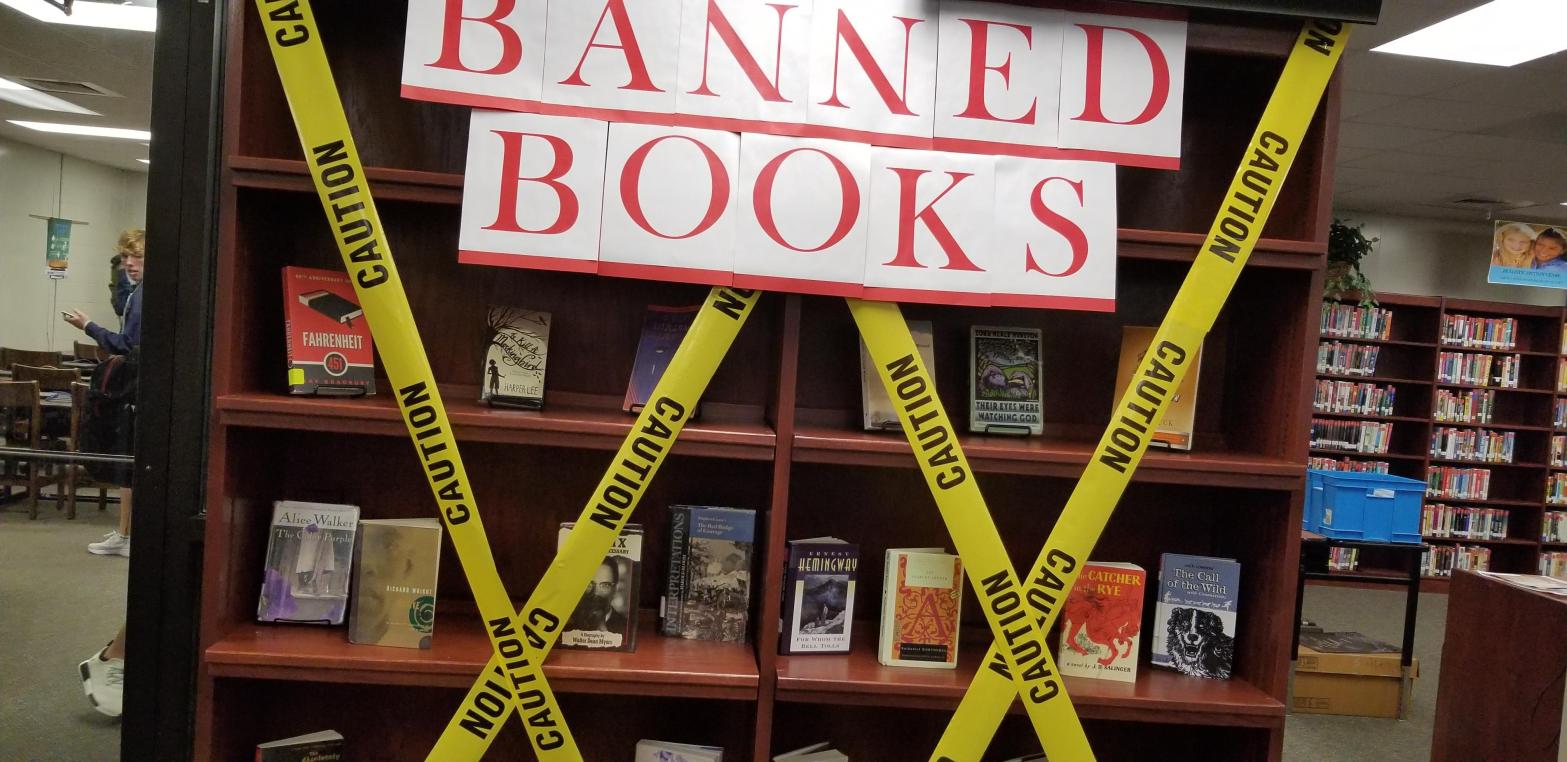
A book ban is a form of censorship that occurs when private individuals, government officials, or organizations remove books from libraries, school reading lists, or bookstore shelves because they object to their content, ideas, or themes.
Throughout the United States, white parents are complaining about books that explain what happened to Black people during the Jim Crow era and slavery. They have objections about their children seeing what other whites did to Black people, like lynching them. They said it made their children uncomfortable about being white. Books about African-American history should not be banned to cover up what really happened to people of color. However sexually explicit books, books about transgenderism, books with curse words, and gory horror books need to be banned because children may get atrocious ideas from them.
The Arizona State Senate passed legislation in July of last year that requires education officials to create a list of sexually explicit books that cannot be used in schools. The law, titled House Bill 2495, also requires that sexually explicit books be banned or read with parental consent. Gov. Doug Ducey (R) signed the bill into law, which also prohibits public schools from using materials that include descriptions of sexual content. The law allows exceptions for books that have serious educational value, but even then parental consent is required for each book or work to be shared with other students. If parental consent isn’t given, that student is given a different assignment. Book bans like this need to happen more often, and in more states.
Books that contain content about transgenderism and sexual intercourse can cause children to think that the information in these books is appropriate. For example, the book Gender Queer: A Memoir by Maia Kobabe. shows illustrations, and narratives about Kobabe’s transformation to being gay and non-binary. There are also explicit pictures of sexual acts included in this book. “Gender Queer” influences youth to be gay when they don’t even understand what it means. If children are introduced to homosexuality at a young age, they will likely show others the books that teach about transgenderism. They may experiment with ideas related to being gay or queer or be peer pressured into doing activities like that. If children strongly believe that they are gay, then they should find books about that on their own, and not have direct access to them. If transgender authors make books for children, they should especially not have transgender sexual intercourse in them like in the book Gender Queer.
Young people reading about being gay, transgender, or non-binary should not question their gender before they understand the meaning behind these ideas. That’s why books that are published need to have better screening and censoring before release.
Sensitive content about detailed killings should also never be put in children’s books because children may get horrified, or think it is funny or cool. Gory scenes in books, or movies can cause fear, anxiety, and aggression. It is proven that the fear we experience when we read horror books is similar to the same fear we feel when in a threatening real life situation. People can also experience PTSD and other anxiety disorders when reading horror books.
This can cause people to be very fearful of others or full of violence. Young children may also injure themselves or others to see blood or cuts. Books with detailed killings should not have gory scenes because images may cause children to forever be scared of blood. The Girl Next Door is a gory horror book that is based loosely on a true story about a woman who tortures her nieces left in her care. The woman enlists her own children to torture and kill one of the young girls. In the book, the girl is burned, gagged, stripped, and even thrown down steps by her aunt’s sons. She eventually dies after all of this torture. The police come and arrest everyone involved in the end. This book can affect children by giving them ideas that torturing people is okay. This may also give children nightmares, and cause them to be very skittish around others. This is why books like The Girl Next Door need to be banned.
While this type of book is controversial, books with curse words are just as bad for young children.
“Go the F**k to Sleep,”a book written by Adam Mansbach about a child not wanting to go to sleep, is 69th on the American Library Association’s list of most commonly challenged books in the U.S. between 2010 and 2019. I would question how that book was even made for young children. The parents didn’t understand how it wasn’t censored for young children either. They eventually brought it up to the school board to have it banned.
Children’s books with curse words in them should not be put in schools. Children should not see profanity and bigoted phrases in books that they will repeat to others. This can lead to fights in schools if one person understands the meaning, but the other doesn’t. If children are allowed to curse freely, they don’t develop a good vocabulary to express their feelings. Cursing also shows one’s character and it can tell people who you are. Companies that want to have a good reputation may not want you for a job. This is why explicit books with curse words need to be banned.
If books are screened better and monitored by parents and teachers, children will better enjoy them and get a better education because they get to read information that is acceptable for their age. They may even enjoy school more because they want to learn about new topics. Parents who want to avoid internet exposure just have a lot of frustration because they send their child to the library to learn, except they get more of the same nonsense or worse. In the constitution, the First Amendment states that Congress shall make no law respecting an establishment of religion, or prohibiting the free exercise thereof; or abridging the freedom of speech, or of the press; or the right of the people peaceably to assemble, and to petition the Government for a redress of grievances. So people can write whatever books they want to write if they can publish them. However, if books were given ratings, parents, schools, and librarians could decide what kinds of books they use for certain age groups, and if a parent wants them to read an explicit book, they have to go out and get it themselves.
 The Watoto Speak!